Q3 2026: Quarterly Newsletter update
Welcome to our first quarterly newsletter for the new homes coming to Nystrom Village!
Throughout this project, we are committed to keeping you informed and connected as work progresses. One of the promises we made early on was to provide regular updates to the community. This newsletter is one way we're honoring that commitment by closing the feedback loop, practicing accountability, and ensuring you know how your input is helping shape the project's progress.
Each quarter, you'll find updates on project milestones, upcoming opportunities to get involved, and highlights of what's happened since our last communication. Click here to stay in the loop and get the latest news and announcements delivered to your email inbox every quarter.
And you can always visit the project website, where you'll find project details, meeting materials, and additional resources between newsletter releases. Thank you for continuing to stay engaged, we're excited to keep this conversation going.
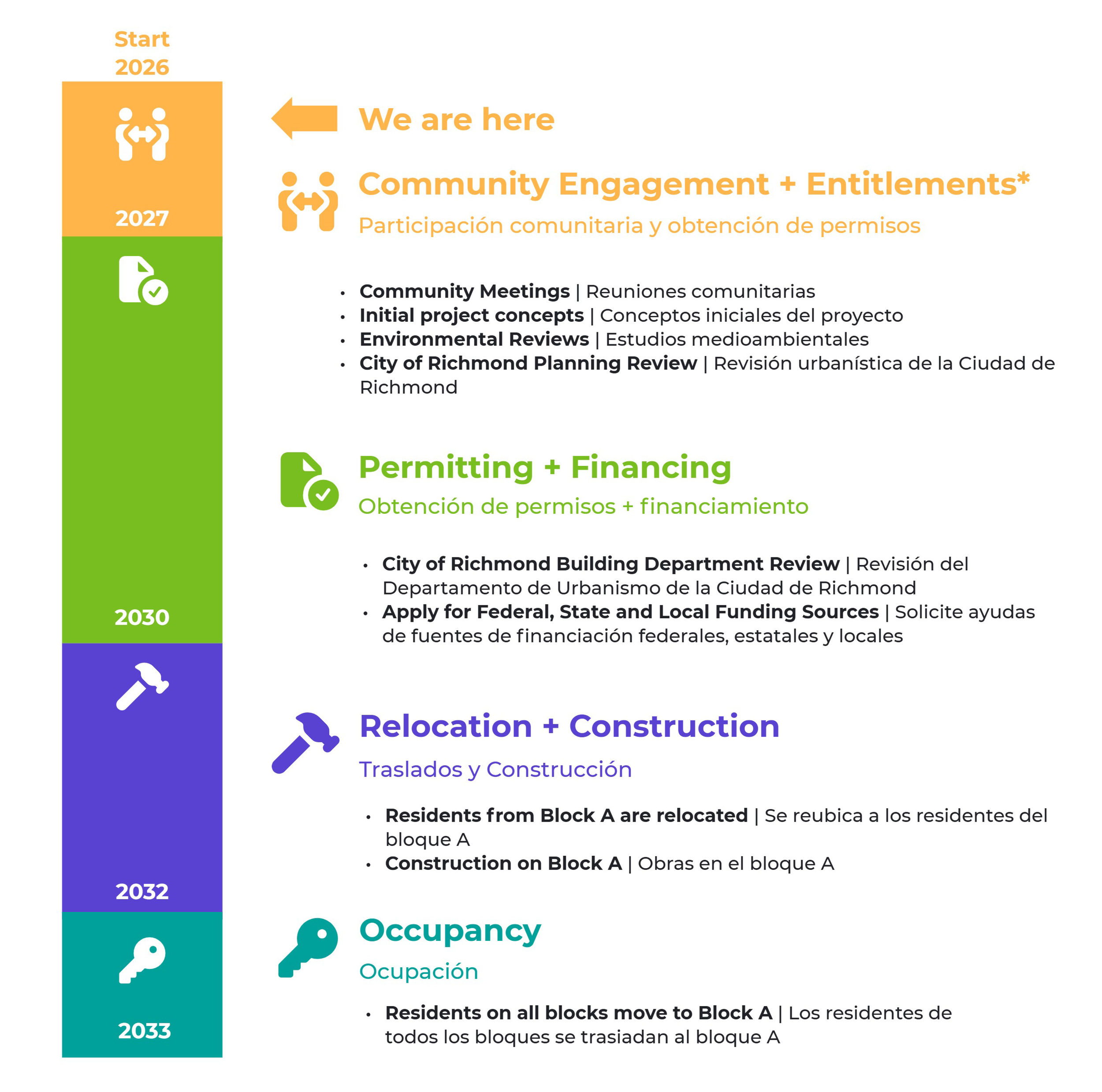
Timeline of Nystrom Village redevelopment
We are in the first phase of this project: Community Engagement + Entitlements.
“Entitlements” are the formal legal approvals granted by the City of Richmond Planning Department that give a developer the legal right to develop a property for a specific use, density, and design. They bridge the gap between owning a piece of land and actually being permitted to build on it.
In the next phase, “Permitting” will be a process for the City of Richmond Building Department to review our design to make sure the building and landscape designs are safe and follow all of the rules in the building code.
What are the reasons for redevelopment?
We sometimes hear questions like why is this project happening in the first place? Or why can’t we just rebuild all the duplex homes at Nystrom Village as they are?
If you’d like to learn more about the history and reasons behind the redevelopment, click the button to take you to our dedicated post below.
What have we been up to?
Resident Workshop 1
Resident workshop 1 took place in person on May 1, 2026 and included a total of 25 residents. The goal of the resident meeting was to introduce the project team and project details, gather resident expectations, questions, and concerns related to the project and relocation, and to start getting to know the residents. Project team members used poster boards to share project data and post it notes to gather expectations, questions, and concerns. Flyers were handed out to residents sharing information about relocation.
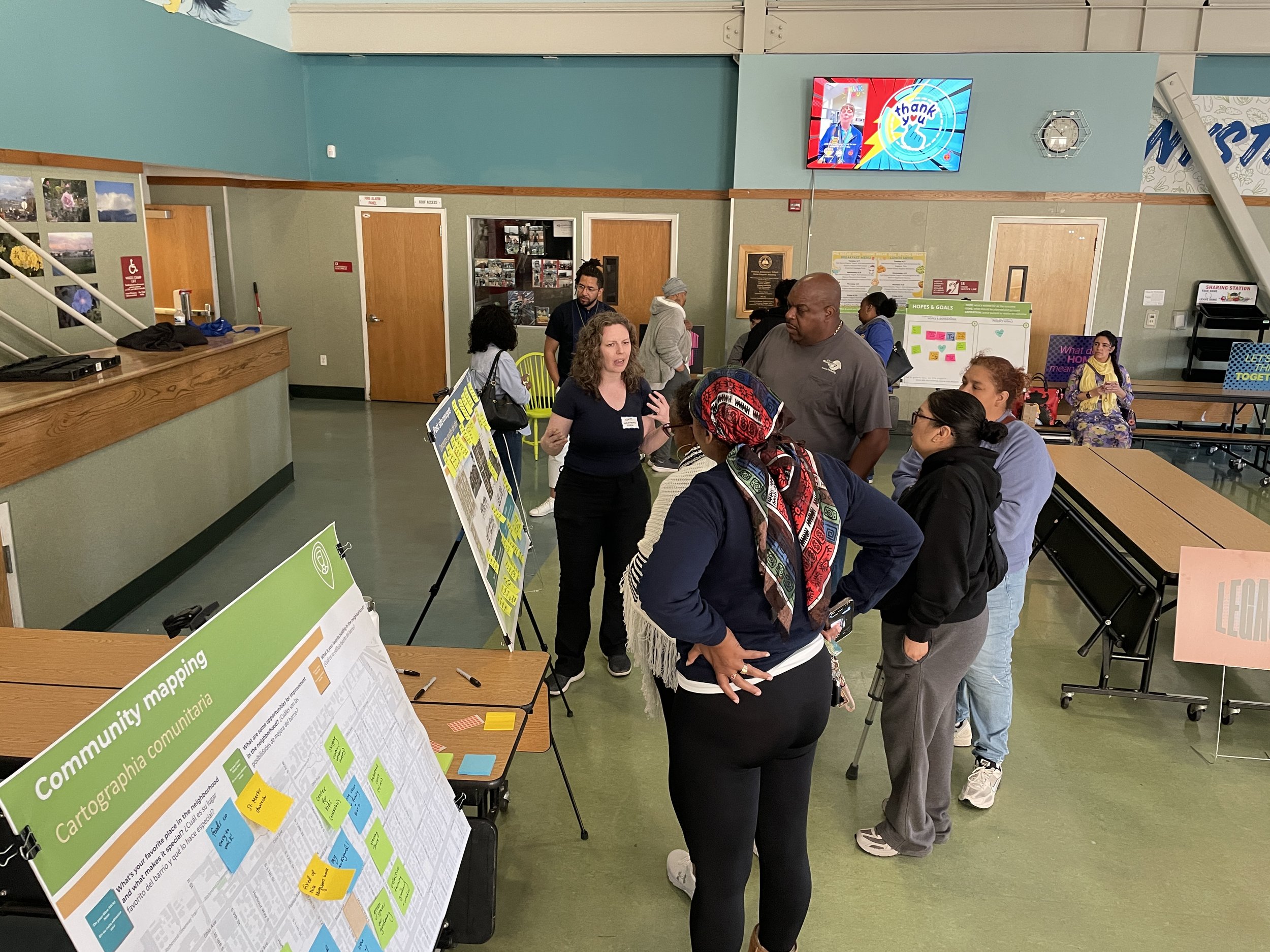
At our resident workshop on May 1 at Nystrom Elementary, we created space for community members to name what matters most, surfaced shared values, hopes, concerns, and initial criteria that will guide our design.
Resident Workshop 2
Resident workshop 2 took place in person on June 5, 2026 and included a total of 40 residents. The goal of the resident workshop was for participants and project team members to co-create design solutions based off of feedback from the first resident workshop while considering the interaction between design solutions and their effects on the many stakeholders touched by the project. Project team members used interactive poster boards to note feedback and design preferences.
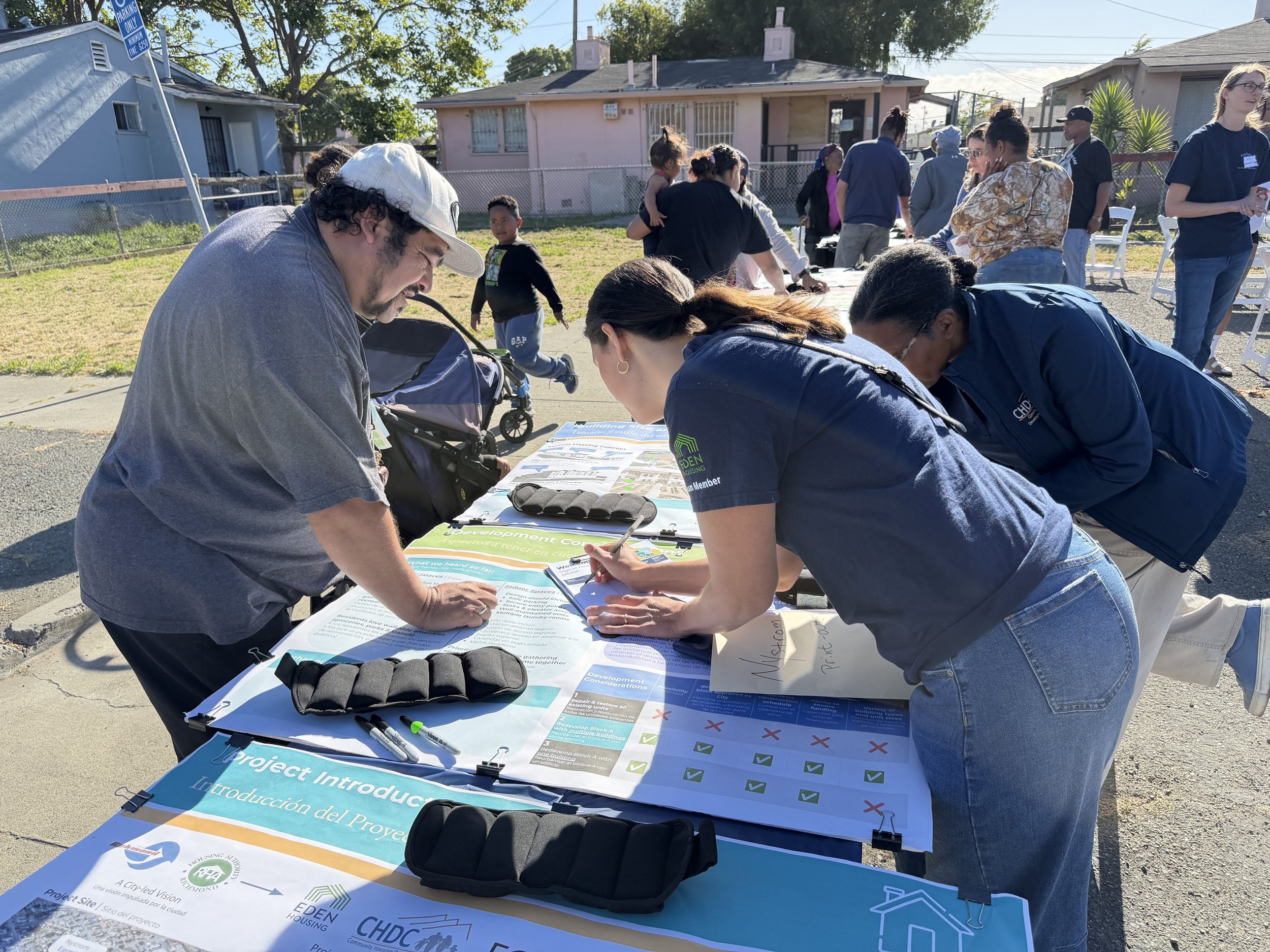
At our resident workshop on June 5 at Nystrom Village, we returned with early design directions and invited targeted input from residents and community members, honoring their insight as critical to shaping meaningful, context-responsive solutions.
Community Workshop
The community workshop took place in person on September 17, 2026 and included a total of 8 non-project team participants representing residents and nearby community members. The goal of the community workshop was for participants to see how previous co-created design solutions and feedback were incorporated into the design of the redevelopment. Participants were also asked to provide recommendations for what activities and services should be included in the three remaining duplexes and how the history of the site should be remembered.
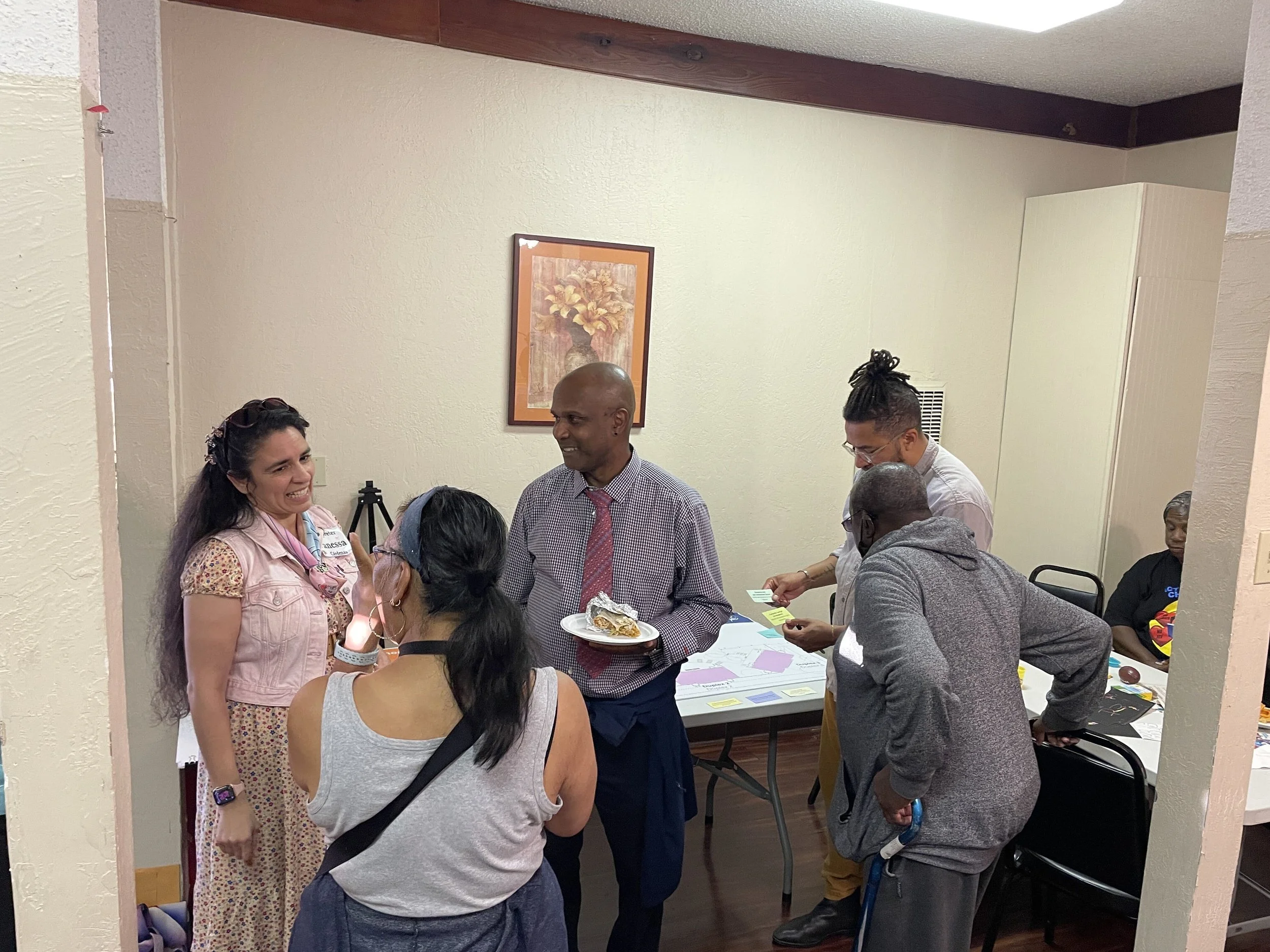
At our community workshop on September 17 at Providence Baptist Church, we showed how your community input made a direct impact on our design and requested additional feedback on a new set of design decisions.
Other Community Engagement
In addition to the three workshops described above, the project team has conducted other community engagement activities as described below.
The project team is in the process of conducting a series of one-on-one interviews with key members of the surrounding neighborhood and the City of Richmond. The goal of these interviews has been to gather input from neighbors and community members about the strengths of their community as well as any thoughts they may have about the project and its site. Interview questions focus on four key areas: (1) connection to the community; (2) knowledge and impressions of the project; (3) insights or suggestions for the community engagement plan; and (4) identification of additional resources or community members our team should connect with.
On June 1 and 2, 2026 the project team conducted 10 one-on-one resident conversations. The goal of these conversations was to deepen the understanding of resident needs, build bridges towards healing, identify key residents who have an interest in taking a more involved role in the development process, and investigate successful precedents for community amenities.
The project team presented at a regularly scheduled meeting of Nystrom Village United Revitalization Effort (NURVE). A total of approximately 28 people attended the NURVE project team’s presentation and participated in a Q&A session on July 10, 2026. Project team members fielded questions about the project’s schedule, goals, and design.
Our recent milestones in our design and entitlements processes so far include:
The project team presented at a joint study session of the Historic Preservation Committee (HPC) and Design Review Board (DRB) on April 22, 2026. Project team members received feedback on the proposed development plans and fielded questions about the project’s schedule, goals, and design.
Submitted Senate Bill (SB) 330 Pre-Application on June 26, 2026. For more information on SB 330, see our summary at the end of this post.
Submitted an entitlement application to Planning Department on August 6.
What’s next?
Weren’t able to attend our community workshop on September 17? That’s okay!
We have created an online survey that asks many of the same questions we asked at our workshop. We would love for you to take our survey so we can incorporate your ideas and feedback into our design.
We will also be posting quarterly updates to this newsletter. If you want to make sure to receive a notice of new posts in your email inbox, click the “Stay in the loop!” button below.
Senate Bill 330 summary
California Senate Bill 330 (the Housing Crisis Act of 2019) is a state law designed to accelerate housing production and protect existing tenants. Its core provisions include:
Freezes Local Development Standards: Developers can submit a "preliminary application" that effectively locks in the local zoning laws, design standards, and city fees in place at that time, preventing municipalities from changing the rules mid-project.
Bans "Downzoning": Local governments are prohibited from enacting new laws that reduce residential density or caps housing limits, unless they "upzone" an equivalent amount of density elsewhere within their borders.
Expedites the Permit Process: Local agencies are required to make faster approval decisions under the Permit Streamlining Act, and the number of public design hearings a project must attend are capped at a maximum of five.
Enforces "No Net Loss" of Housing: Any redevelopment project that demolishes existing housing must replace at least the same number of units that originally existed on the site.
Protects Displaced Tenants: If a project demolishes low-income or rent-controlled housing, the developer must provide the displaced occupants with relocation assistance, the right to remain until 6 months before construction, and the right of first refusal for the new affordable units.